
Antennas that still work inside your product
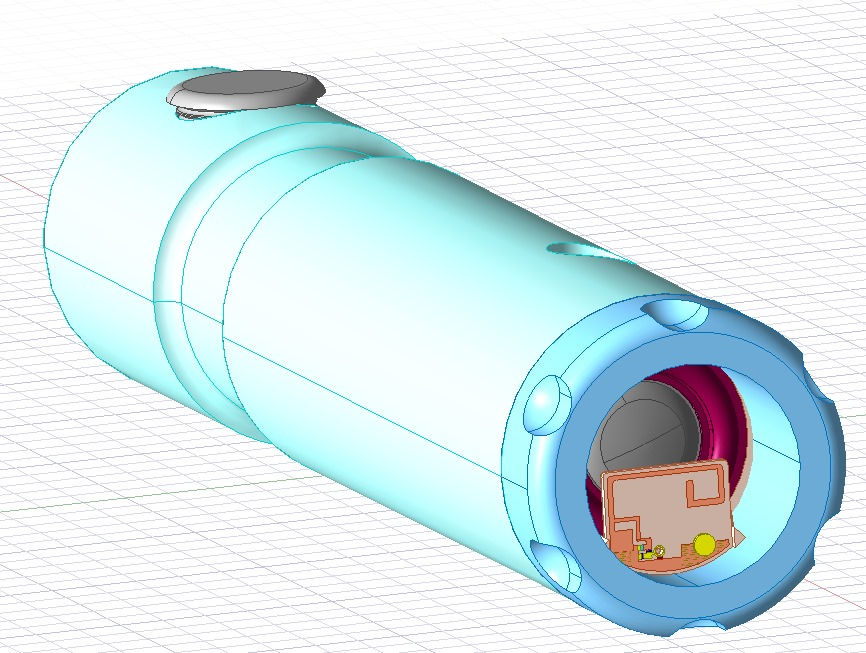
A small antenna never radiates alone. RF currents flow on the circuit board and the battery, and the enclosure and the hand holding the product change how they flow. The whole product becomes part of the antenna, so we design the antenna together with it, and judge it by the link it delivers, not by the datasheet.
Questions we often hear
“Range halved when we put the board in its final housing.”
“We need GNSS, LTE and Bluetooth antennas in a box the size of a matchbox.”
“The antenna is perfectly matched on the bench. Why is the range still short?”
“Our NFC reader only sees cards at one centimetre.”
What we do
-
Antenna concept and choice: chip, PCB trace, flex, wire, coil, ferrite rod or a custom design.
-
3D electromagnetic simulation, including the enclosure, battery, PCB and, where it matters, the human body.
-
Matching networks, designed and then tuned on the real hardware.
-
Impedance measurements, relative radiated measurements in our anechoic chamber, and checks of detuning by hands, bodies and metal.
-
NFC and RFID coils for LF and HF, including retuning of existing designs.
-
Integration guidelines for mechanics and production: tolerances, keep-out zones, production test.
We judge an antenna by what it does for the link budget of the finished product: how much power the product sends out and how weak a signal it can still receive. A good match on the network analyzer, the classic −10 dB rule, cannot tell you that.
Bands
What you get
-
Antenna concept and choice: chip, PCB trace, flex, wire, coil, ferrite rod or a custom design.
-
3D electromagnetic simulation, including the enclosure, battery, PCB and, where it matters, the human body.
-
Matching networks, designed and then tuned on the real hardware.
-
Impedance measurements, relative radiated measurements in our anechoic chamber, and checks of detuning by hands, bodies and metal.
-
NFC and RFID coils for LF and HF, including retuning of existing designs.
-
Integration guidelines for mechanics and production: tolerances, keep-out zones, production test.
The human side
A good antenna is one nobody has to fight with: no walking around the room looking for signal, no “tap it again”, no support calls.
Working on something like this?
Other areas
Wireless connectivity